Organizational Design and NCDs Prevention
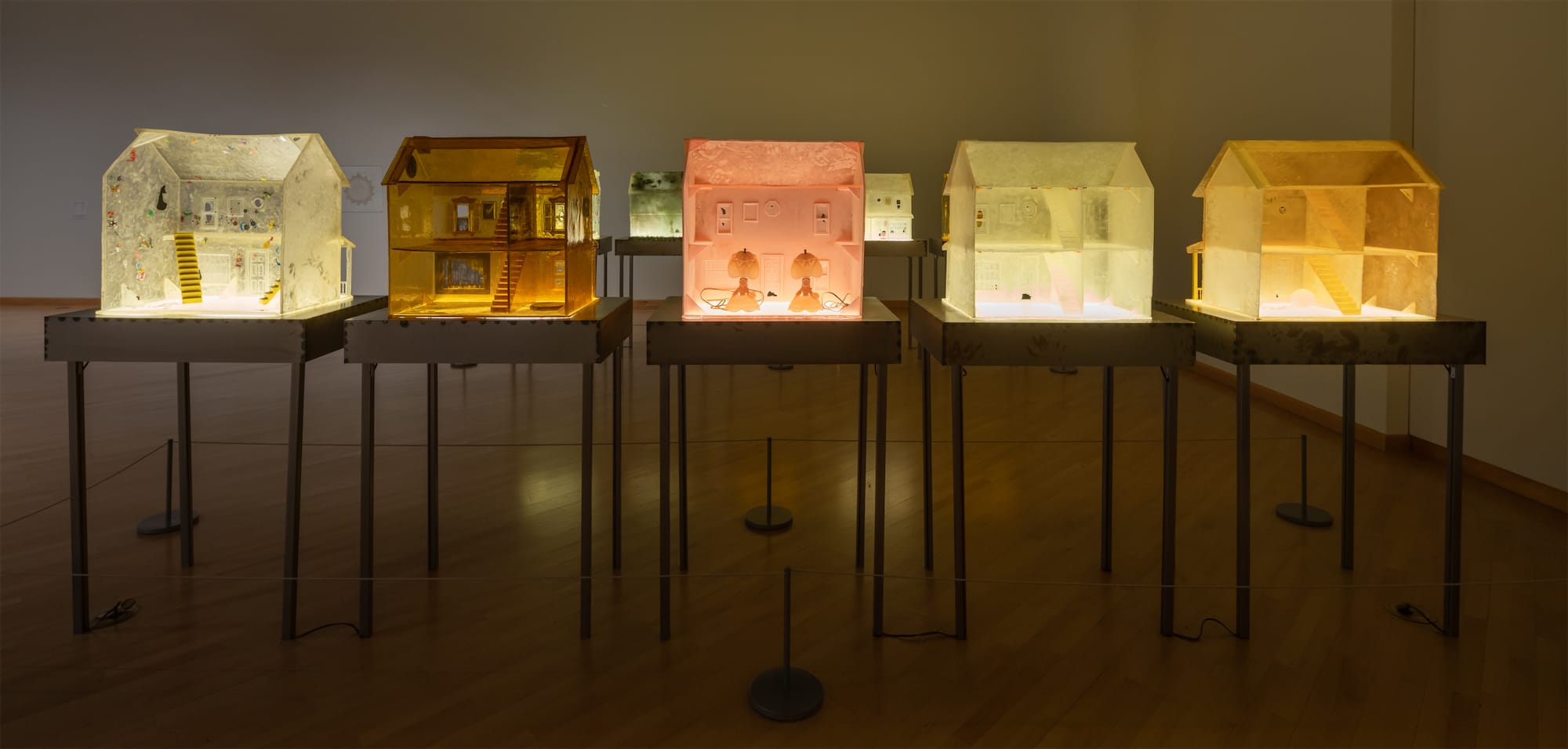
Image reference: Sula Bermúdez-Silverman: Neither Fish, Flesh, nor Fowl. Photo: Elon Schoenholz.
Keywords:
health seeker; non-communicable diseases; non-adherence; organizational design; behavioral change; design capabilities.
Introduction:
The non-communicable diseases epidemic (NCDs) is the most pressing health issue of our times. Almost all NCDs in Europe are caused by modifiable behavioral risk factors, such as tobacco use, alcohol consumption, diet, and physical activity (WHO, 2021), which means they are, in theory, preventable.
The healthcare system globally is now focused on NCDs prevention and recognizes the crucial need to promote healthy lifestyle choices and advocates for behavioral change. Despite the extensive efforts there remains a widespread problem of non-adherence, especially in the long-term maintenance of significant behavioral change.
In this paper I will argue that service design can contribute to achieving long lasting results by changing norms, rules, behaviors, and underlying beliefs within the household or family unit.
First the context will be introduced, as to highlight in particular the new roles and relationships between the person and the healthcare system. Then the currently available and practiced solutions for behavior change, Behavioral Change Interventions (BCIs), will be discussed in order to understand their strengths and limits. Using the Pyramid of Health Impact as a framework the need will be established to shift from individual interventions focused on education and counseling to interventions on the context so as to support healthy decisions. The paper then will go on to focus on the specific context of the household, proposing the interpretation of the family unit as an organization, and lastly will suggest the application of service design methodology to the issue at hand.
Background:
Among the most pressing issues that concern health globally, the United Nations addressed the non-communicable diseases epidemic (NCDs) and set target 3.4 as follows: “By 2030, reduce by one third premature mortality from non-communicable diseases through prevention and treatment and promote mental health and well-being” (United Nations, 2015).
Also referred to as chronic diseases, NCDs include cardiovascular disease, cancer, diabetes, and chronic respiratory disease; these are caused by the complex interaction of different factors, some of which are more difficult to intervene on, such as genetic factors, while others, such as environmental and behavioral factors, are in theory largely preventable.
According to the World Health Organization, 85% of NCDs in Europe are caused by modifiable behavioral risk factors, implying that any successful efforts in changing such unhealthy behaviors alone would yield significant improvement in containing and managing the NCDs epidemic. The behavioral risk factors that increase the incidence of chronic diseases are tobacco use (or second-hand smoke exposure), harmful alcohol consumption, unhealthy diet, and inadequate physical activity (WHO, 2021).
The healthcare systems in place today were historically conceived, designed and developed around the threat of infectious (or communicable) diseases. As a consequence, their model of care is at its core episodic and responsive to acute, punctual, and urgent problems. (WHO, 2002). Furthermore, healthcare as a universal service operates through standard procedures and protocols, executed within a linear framework that gives the patient the passive role of recipient. As the threat of infectious diseases has given way to NCDs as the primary concern, the healthcare system is unfit to provide continuous care and contain the epidemic through prevention. The main reason for this is that, for the most part, both the prevention and treatment of NCDs cannot be administered to the patient as it is a matter of behavior and lifestyle, and thus they themselves need to take on an active role as “producers” of their own health while being provided with specific guidance and support (Murray et al., 2006). The awareness of the new central role of the patient on determining their own health has shifted the responsibility, and the associated burdens, of both action and decision-making to the person themselves (Clarke, 2010).
To better describe the new relationship between the individual and the healthcare system, Peter Jones (2013) introduces the term health seeker in lieu of patient, user or consumer. The focus is on the proactive role of the person, the life-long continuity of the efforts/activities and the subjectivity of the desired outcome. Anyone searching for health improvement is a health seeker, even when it is in regard to someone else’s health.To support and empower the health seeker in the prevention and management of NDCs the healthcare system, besides investing in education to increase awareness of healthy lifestyle, has been developing and offering behavioral change interventions (BCI) to tackle behavioral risk factors. The interventions are complex as they are usually specific to a certain situation and context, but Michie et al. (2013) have found 93 common replicable techniques that when combined intentionally can provide a framework for the creation and administration of BCIs, which are applicable to a wide range of health seeker needs.
Development:
Despite the diversity of BCIs, even when they are successful in initiating behavioral change, they fail to ensure long term adherence to the recommended healthy lifestyle (Darukaradhya and Krishnamurthy, 2025); non-adherence is a widespread problem that seriously undermines the efficacy of behavioral intervention and overall effort in preventing NCDs (Middleton et al., 2013). Frieden (2010) suggests a model to interpret the efficacy of different types of health interventions, The Health Impact Pyramid, by placing them among 5 corresponding tiers, according to the effort needed to achieve change and the population size they can impact. Placed at the top of the pyramid, where the most effort is needed and the smallest population is reached, is “Counseling and Education”, which typically encompass BCIs. Successful behavioral change of the single individual through health education and counseling is presented as a rare exception. The author highlights that the root of the problem doesn’t lie at the individual level: “The need to urge behavioral change is symptomatic of failure to establish contexts in which healthy choices are default actions” (Frieden, 2010).
The base of the pyramid is populated by changes in the socioeconomic factors, which have theoretically the highest impact potential and require the least effort expenditure by the individual, but such changes are politically the most difficult and the least likely to be enacted. Consequently, the interventions in the second tier are in practice the most effective. They prioritize “changing the context to encourage healthy decisions”, with the goal of making such decisions the standard, and harder to avoid than to enact. The context of the household has a recognized central role in influencing the health of its members, both in providing a physical shared environment and as the social ecosystem where behaviors and beliefs around health are shaped and learnt. Furthermore, it is the sphere in which many of the daily choices that the health seeker, as an individual or as a family unit, undertakes to ultimately define a more or less healthy lifestyle.
As part of BCIs efforts, and other health promoting interventions as well, the family is frequently addressed but mainly is considered as a mere source of support, supervision and modeling (Arena et al., 2015; Ho et al., 2022; Saxena et al., 2025; Skoglund et al., 2022; Thornton et al., 2019). Embedded deeply within the family relationship there are beliefs about health and mechanisms that determine each member’s behaviors. The untapped potential lies in changing values, norms and behaviors patterns in a family unit so as to achieve long-lasting behavioral change. An approach that targets the whole family instead of the individual is therefore more powerful, as Rose (2008,p.135) points out in his revolutionary work: “Personal life-style is socially conditioned… Individuals are unlikely to eat very differently from the rest of their families and social circle… It makes little sense to expect individuals to behave differently than their peers; it is more appropriate to seek a general change in behavioural norms and in the circumstances which facilitate their adoption”.
Families are constantly facing the need to react and adapt to external and internal factors; thus, well-functioning families must be able to change. The family systems theory and the Circumplex Model (Olson, 2000) describe family flexibility as “the amount of change in its leadership, role relationships and relationship rules”. Functional families find themselves in the middle of the flexibility scale, they’re neither chaotic nor rigid, they’re able to change while maintaining stability.
These different perspectives highlight the potential to achieve long-lasting behavioral change and consequently long-term adherence to healthy lifestyle, by acting on the beliefs, norms, rules and relationships within the family unit. Service Design can provide a significant contribution in this direction through the tools of organizational change (Junginger & Sangiorgi, 2009). In fact, we can think of the household as an organization whose goal is not only the survival of the family members, but also their continued flourishing. Likewise, BCIs can be compared to peripheral service interaction design interventions, as they are focused on achieving the artefacts or tangible results such as weight-loss and behaviors such as adequate physical activity. These interventions, as discussed above, present an issue in long term adherence, on the other hand though they offer the opportunity to dig deeper and bring greater change to the family organization; either to the level of service design intervention by questioning existing norms and values or may be able to achieve even organizational transformation by shaking the fundamental assumption from which all the other norms, values, and behaviors stem (Junginger & Sangiorgi, 2009).
In applying organizational design within households it is fundamental to reflect on and consider their design legacies (Junginger, 2015). In fact, just as in any other organization a household carries on the core activities of managing, designing, changing, and organizing, in order to achieve its goals. Especially in the light of the proactive health seeker role which is applied to each member and to the family as a unit it’s clear how these activities strictly relate to health behaviors and lifestyle. These design legacies should be highlighted and leveraged when appropriate to achieve the goal, in this case the prevention of NCDs. While on the other hand they could present a barrier that must be approached with tact and sensitivity as it is likely associated with culture, tradition or other personal beliefs. Either way, the intervention should leave the household equipped with design capabilities and empowered to face unavoidable change and if necessary to again adapt their norms, values and beliefs.
Particular attention should be paid to the role of mothers, and women in general, as they are frequently the primary caregiver and have a central role in shaping the health behaviors of the family (Ho et al., 2022).
Conclusions:
The NCDs epidemic forces the healthcare system to shift the focus from health centers, clinics and hospitals to family households, from administering procedure onto passive patients to supporting health seekers in their ongoing efforts in maintaining healthy lifestyles. BCIs focused on education and counseling on the individual level are the most common and easily available response of the healthcare system in this direction, unfortunately though, their impact is very limited mainly due to a challenge of long-term adherence.
With this paper I suggest the application of service design methodology to target instead the family or household unit within BCIs and act on the underlying conditions for change rather than solely on the execution of certain behaviors. Through organizational design it is possible to act on the norms and rules of the family, which importantly dictate which behaviors are to be accepted or even praised and those which are not to be tolerated. It is also possible, and perhaps even necessary, to intervene on the fundamental assumptions that are the core of norms, rules and behaviors. Either approach allows the healthcare system to achieve greater health impact and long-lasting behavioral change by modifying the daily context and by ultimately framing the healthy behavior as the most convenient, easy, and coherent for the health seeker. Furthermore, by focusing on design legacies within the household and developing their design capabilities it is possible to increase their resilience and better empower them as health seekers to maintain in the long term a healthy lifestyle, in spite of the uncertainty and rapid changes present in our time.
As BCIs are mainly offered as a responsive service when the beginning of an NCD has already been detected, future research is needed to understand what other entry points into the “organizational periphery” of the household are, in order to address primordial and primary prevention on a healthy population as well.
References:
Arena, R., Guazzi, M., Lianov, L., Whitsel, L., Berra, K., Lavie, C. J., … & Shurney, D. (2015). Healthy lifestyle interventions to combat noncommunicable disease—a novel nonhierarchical connectivity model for key stakeholders: a policy statement from the American Heart Association, European Society of Cardiology, European Association for Cardiovascular Prevention and Rehabilitation, and American College of Preventive Medicine. European heart journal, 36(31), 2097-2109.
Clarke, J. L. (2010). Preventive medicine: a ready solution for a health care system in crisis. Population health management, 13(S2), S-3. Darukaradhya, T. B., & Krishnamurthy, J. (2025). Modifying non-communicable disease behaviours through effective health communication and behaviour change: a systematic review. Preventive Medicine: Research & Reviews, 2(1), 24-39.
Frieden, T. R. (2010). A framework for public health action: the health impact pyramid. American journal of public health, 100(4), 590-595. Ho, Y. C. L., Mahirah, D., Ho, C. Z. H., & Thumboo, J. (2022). The role of the family in health promotion: a scoping review of models and mechanisms. Health promotion international, 37(6), daac119.
Jones, P. H. (2013). Design for care: Innovating healthcare experience (Chapter 1). Rosenfield Media.
Junginger, S., & Sangiorgi, D. (2009). Service design and organisational change. Bridging the gap between rigour and relevance. In International association of societies of design research 2009 (pp. 4339-4348). KOR.
Junginger, S. (2015). Organizational design legacies and service design. The Design Journal, 18(2), 209-226.
Michie, S., Richardson, M., Johnston, M., Abraham, C., Francis, J., Hardeman, W., … & Wood, C. E. (2013). The behavior change technique taxonomy (v1) of 93 hierarchically clustered techniques: building an international consensus for the reporting of behavior change interventions. Annals of behavioral medicine, 46(1), 81-95.
Middleton, K. R., Anton, S. D., & Perri, M. G. (2013). Long-term adherence to health behavior change. American journal of lifestyle medicine, 7(6), 395-404.
Murray, R., Burns, C., Vanstone, C., & Winhall, J. (2006). RED report 01: Open health. Design Council, London. Olson, D. H. (2000). Circumplex model of marital and family systems. Journal of family therapy, 22(2), 144-167.
Olson, D. H. (2000). Circumplex model of marital and family systems. Journal of family therapy, 22(2), 144-167.
Rose, G., Khaw, K.-T., & Marmot, M. (2008). Rose’s strategy of preventive medicine (2nd ed.). Oxford University Press. p. 135.
Saxena, I., Kumar, M., Kannoujia, B. L., Aishwarya, R., & Sen, A. (2025). Investigating the Causes of Non-adherence to Recommended Lifestyle Modifications Among Indian Patients With Newly Diagnosed Type 2 Diabetes Mellitus or Hypertension. Cureus, 17(2).
Skoglund, G., Nilsson, B. B., Olsen, C. F., Bergland, A., & Hilde, G. (2022). Facilitators and barriers for lifestyle change in people with prediabetes: a meta-synthesis of qualitative studies. BMC public health, 22(1), 553.
Thornton, R. L., Yang, T. J., Ephraim, P. L., Boulware, L. E., & Cooper, L. A. (2019). Understanding family-level effects of adult chronic disease management programs: Perceived influences of behavior change on adolescent family members’ health behaviors among low-income African Americans with uncontrolled hypertensions. Frontiers in Pediatrics, 6, 386.
UN (2015). Transforming Our World: The 2030 Agenda for Sustainable Development. Resolution Adopted by the General Assembly on 25 September 2015, 42809, 1-13.
World Health Organization. Noncommunicable Disease, & Mental Health Cluster. (2002). Innovative care for chronic conditions: building blocks for action: global report. World Health Organization.